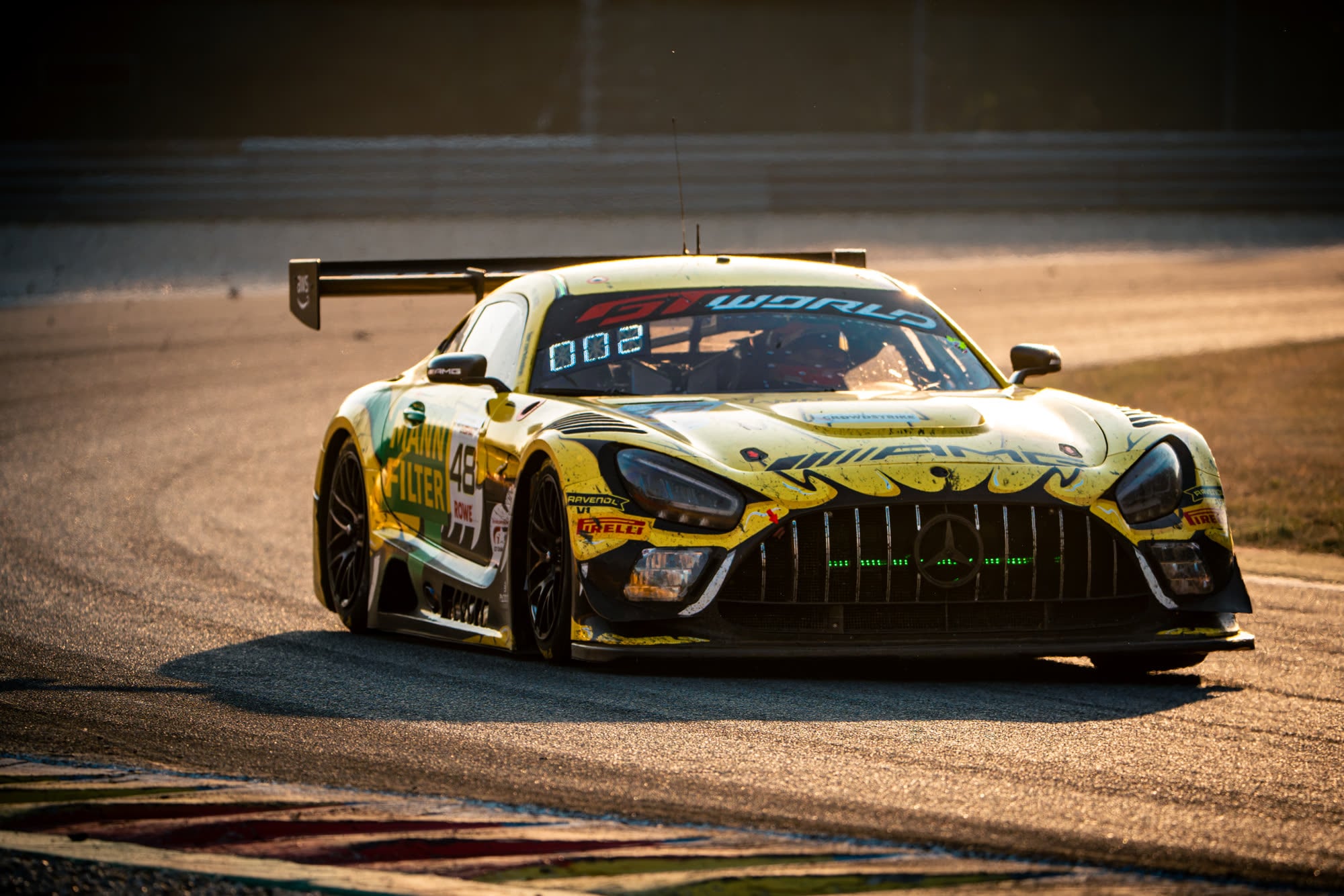
Gear matters less than people think. What matters is knowing what each piece does and buying it when you truly need it.
01The camera
Any interchangeable-lens camera with manual controls is fine to start. Today's mirrorless cameras have tracking autofocus that helps a lot on track.
If you care about video too, check three things: 4K at 50 frames, 10-bit recording and a log profile. Two card slots are extra safety on important jobs.
02Lenses
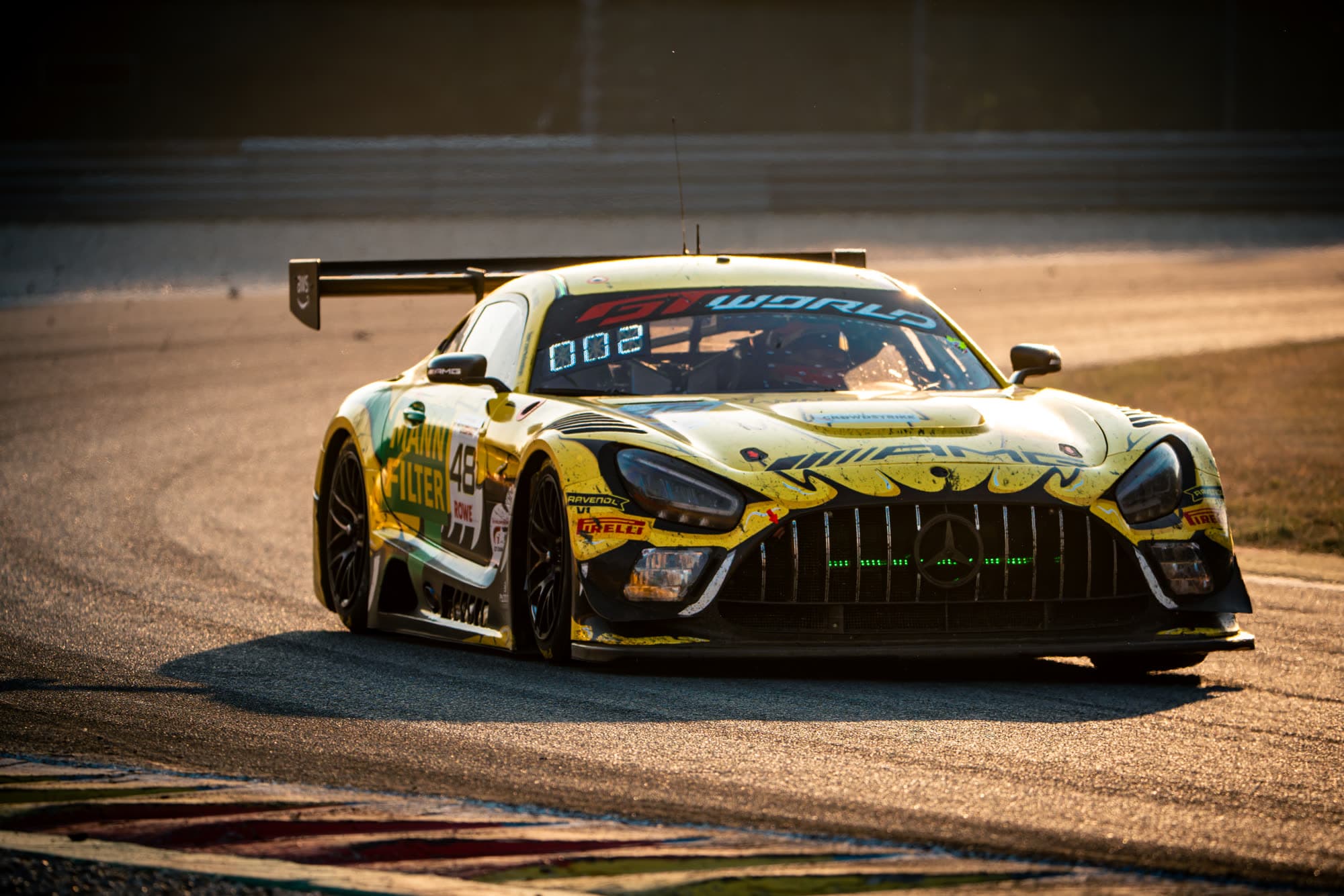
A good standard zoom (like a 24-70 or 28-75) covers pits, paddock and details. On track the cars are far away: you need a telephoto, at least up to 200 mm. Many of my sunrise photos at Spa are at 200 mm.
A fast prime, a 35 or 50 mm f/1.8, is cheap and teaches a lot: no zoom, you move, and in low light in the pits it makes the difference.
03Cards and batteries
Burst shooting and video need fast cards: for video check the speed class (V60 or V90). Carry several smaller cards rather than one huge one: if one fails, you don't lose everything.
A race day drains more batteries than you think, especially at night and in the cold. At least two or three spares.
04Tripod and monopod
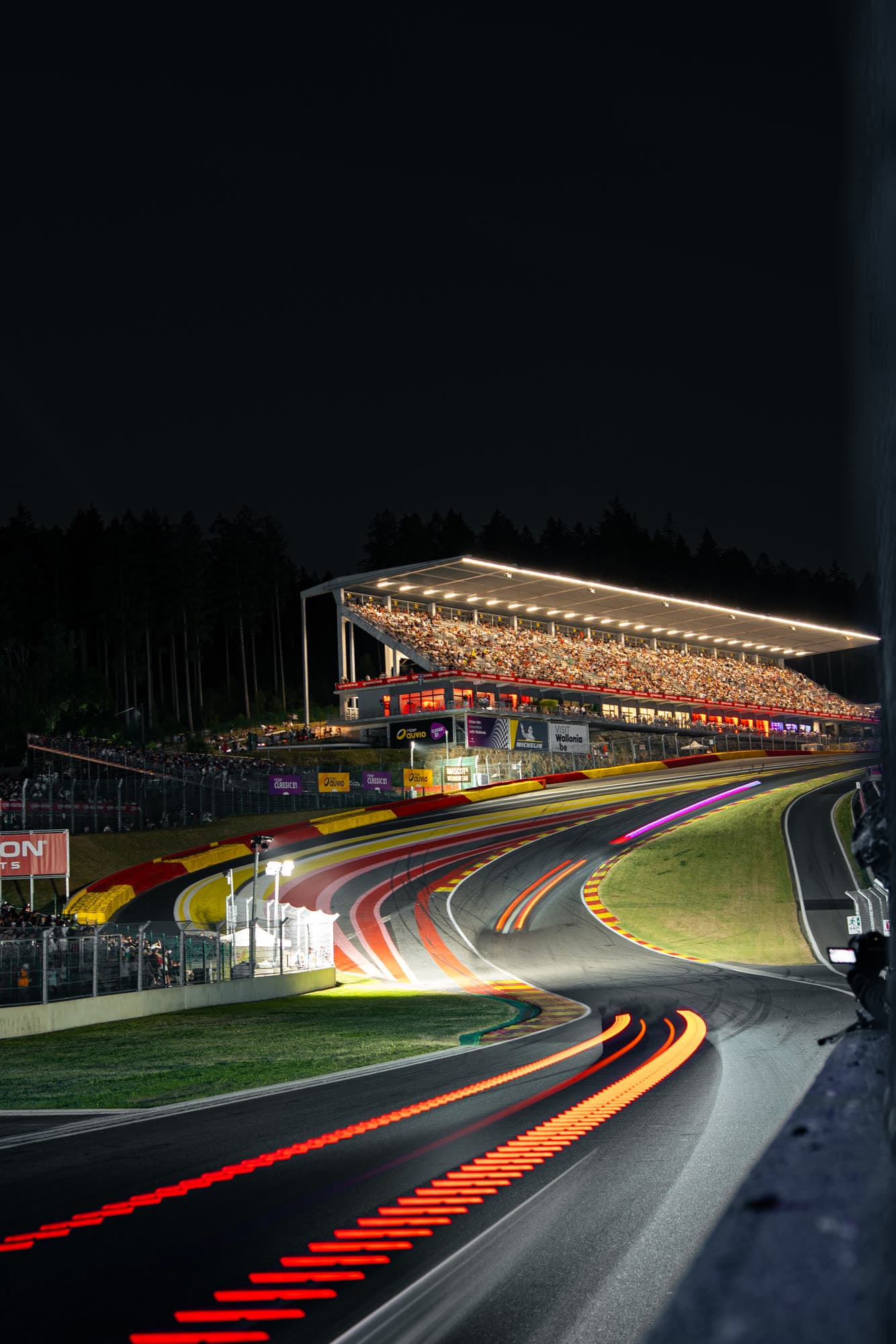
A tripod is for long exposures and locked-off video shots. A monopod carries the weight of a telephoto for hours and leaves you free to follow the cars.
05Filters
An ND filter darkens the image without changing colors: for daytime video it is almost mandatory, to respect the 180° rule. A polariser removes reflections from the paint and deepens the sky.
06Audio and software
For video, an on-camera microphone is the first purchase after the camera itself.
For photos I use Lightroom, for video DaVinci Resolve, which also has a very complete free version. One program known inside out beats five used halfway.
07What can wait
Gimbal, drone, lights, a second body, very fast and expensive lenses. Useful tools, but only once you know exactly what you are missing.
- At the track: earplugs, comfortable shoes, a rain cover.
- Always follow the marshals and stay behind the barriers.