Three settings decide how much light comes in and how the picture looks. The rest is where you stand and when you press the shutter.
01Exposure: three settings
A photo is light collected by the sensor. How much depends on three things: how long the shutter stays open, how wide the aperture is, and how sensitive the sensor is (ISO).
Each one has a side effect. Shutter speed changes motion blur, aperture changes depth of field, ISO changes noise. Good photography means choosing the effect you want and balancing it with the other two.
02Shutter speed
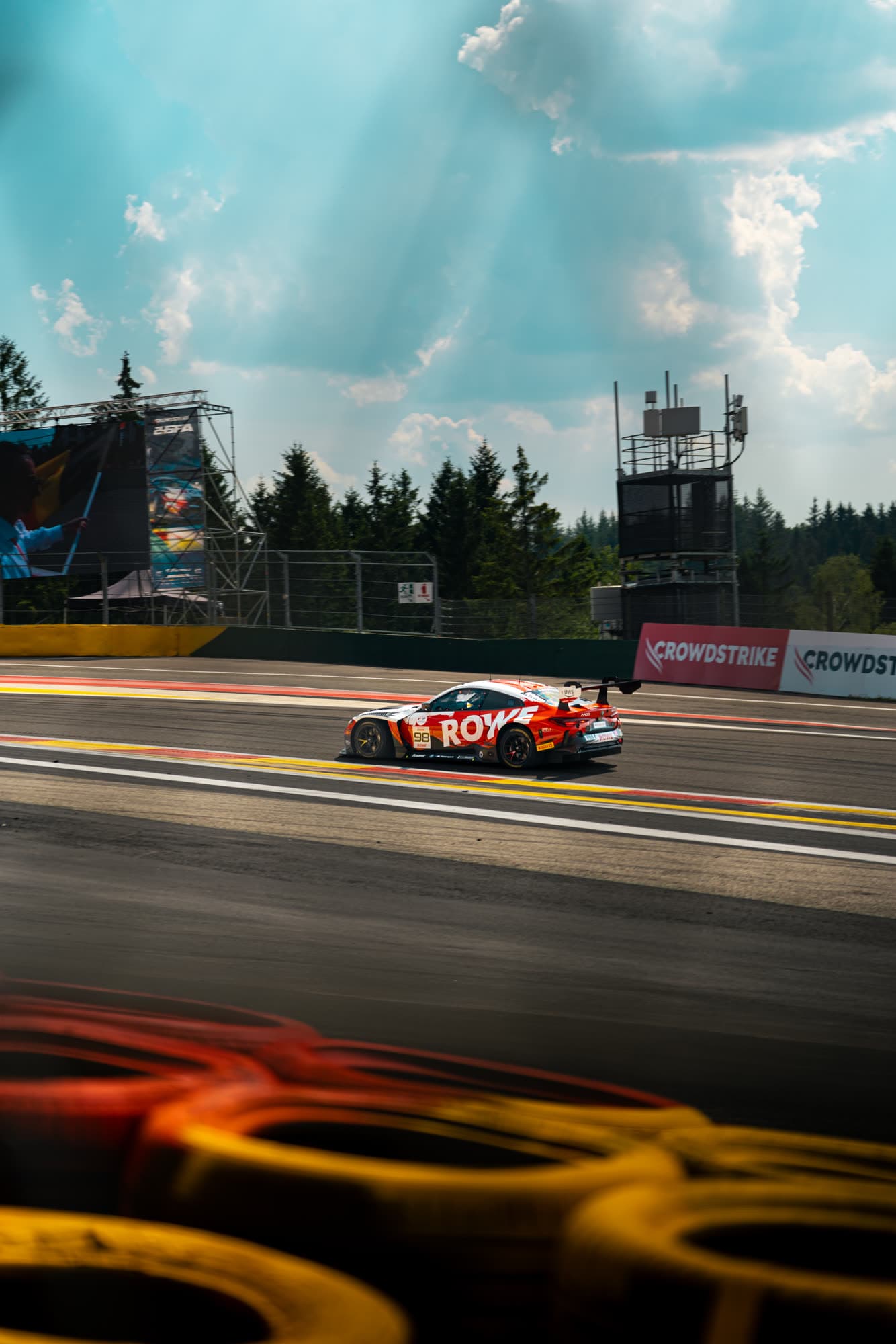
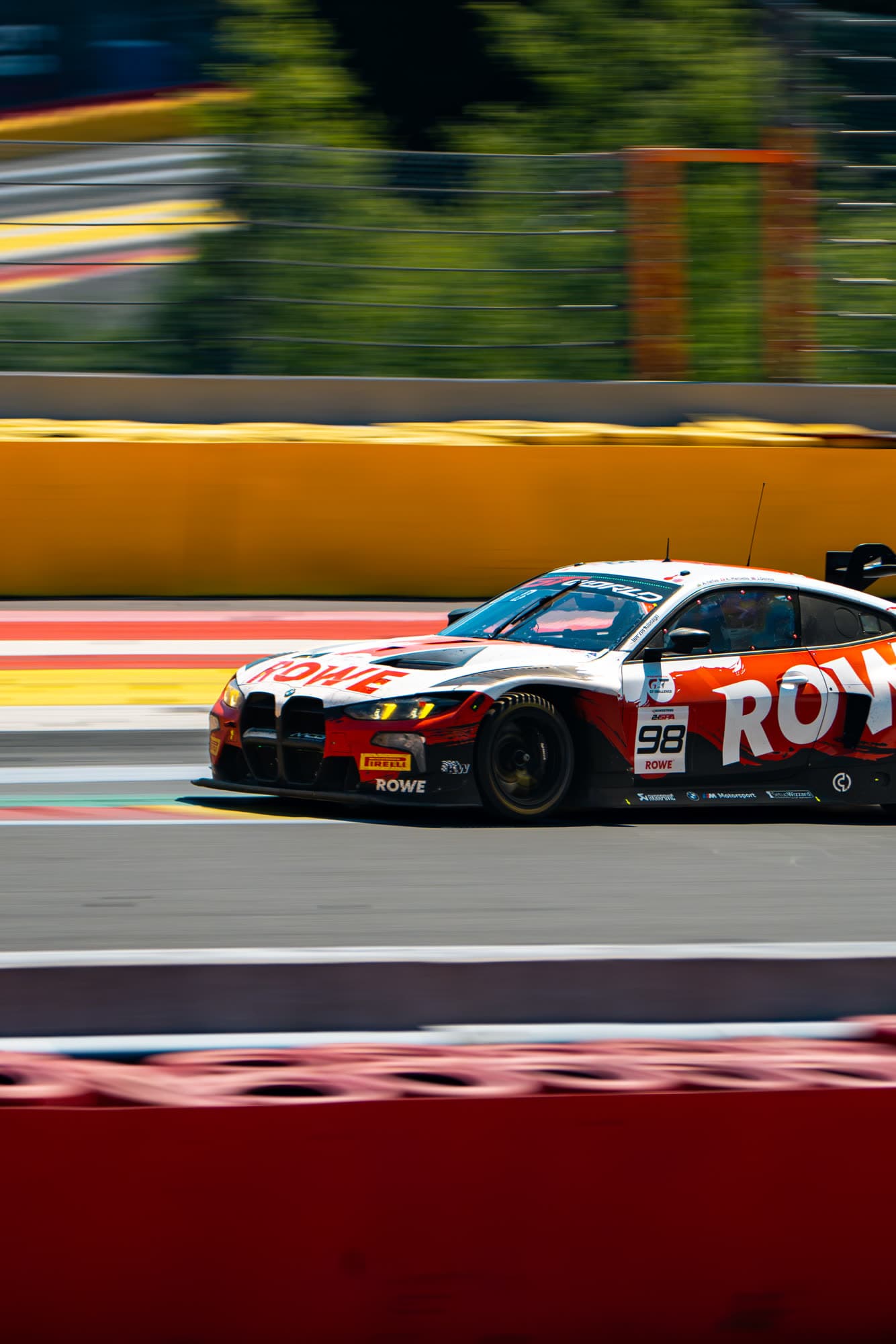
A fast shutter, like 1/1000 or 1/2000 of a second, freezes a car on track. A slow one lets motion run: spinning wheels, a blurred background, light trails.
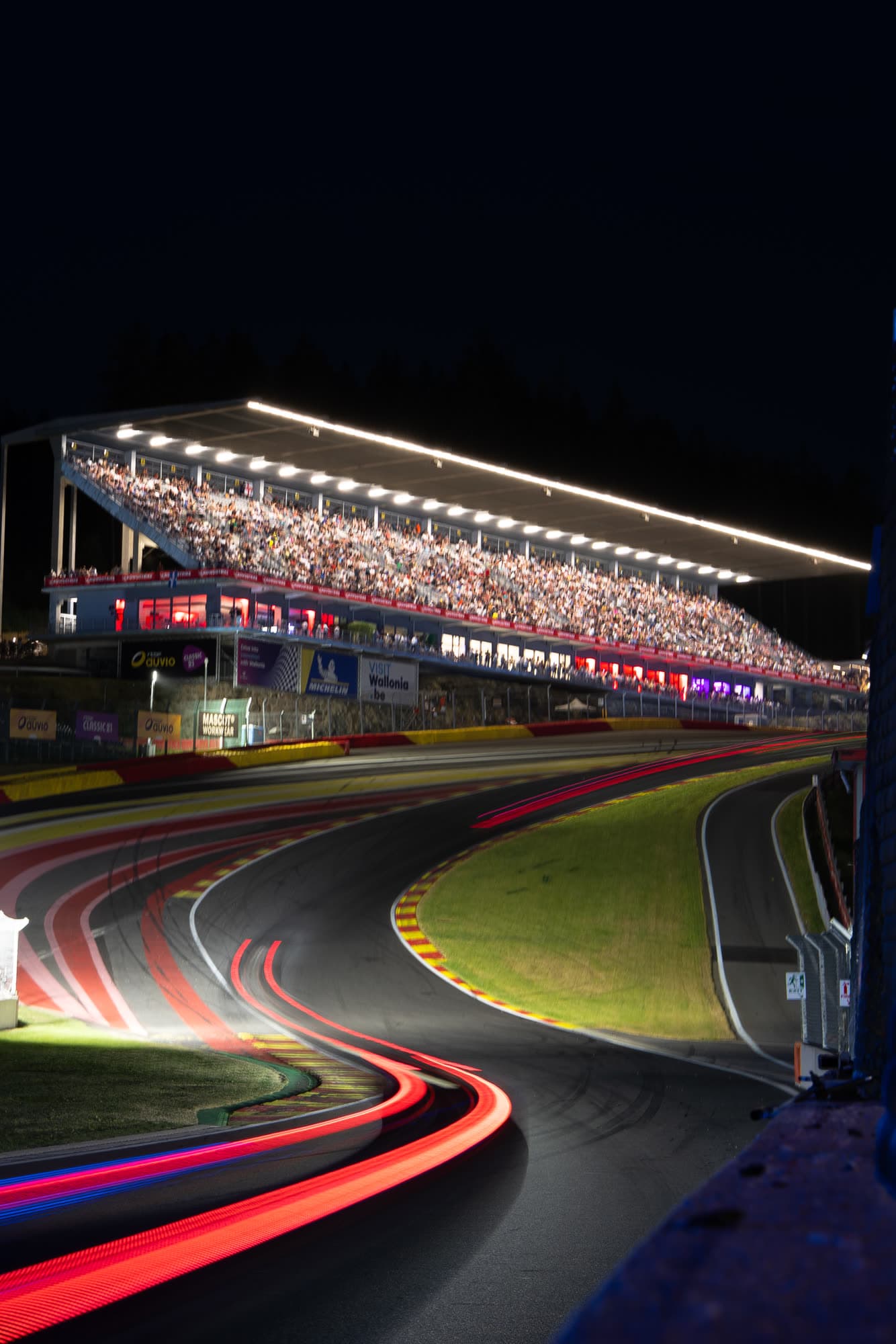
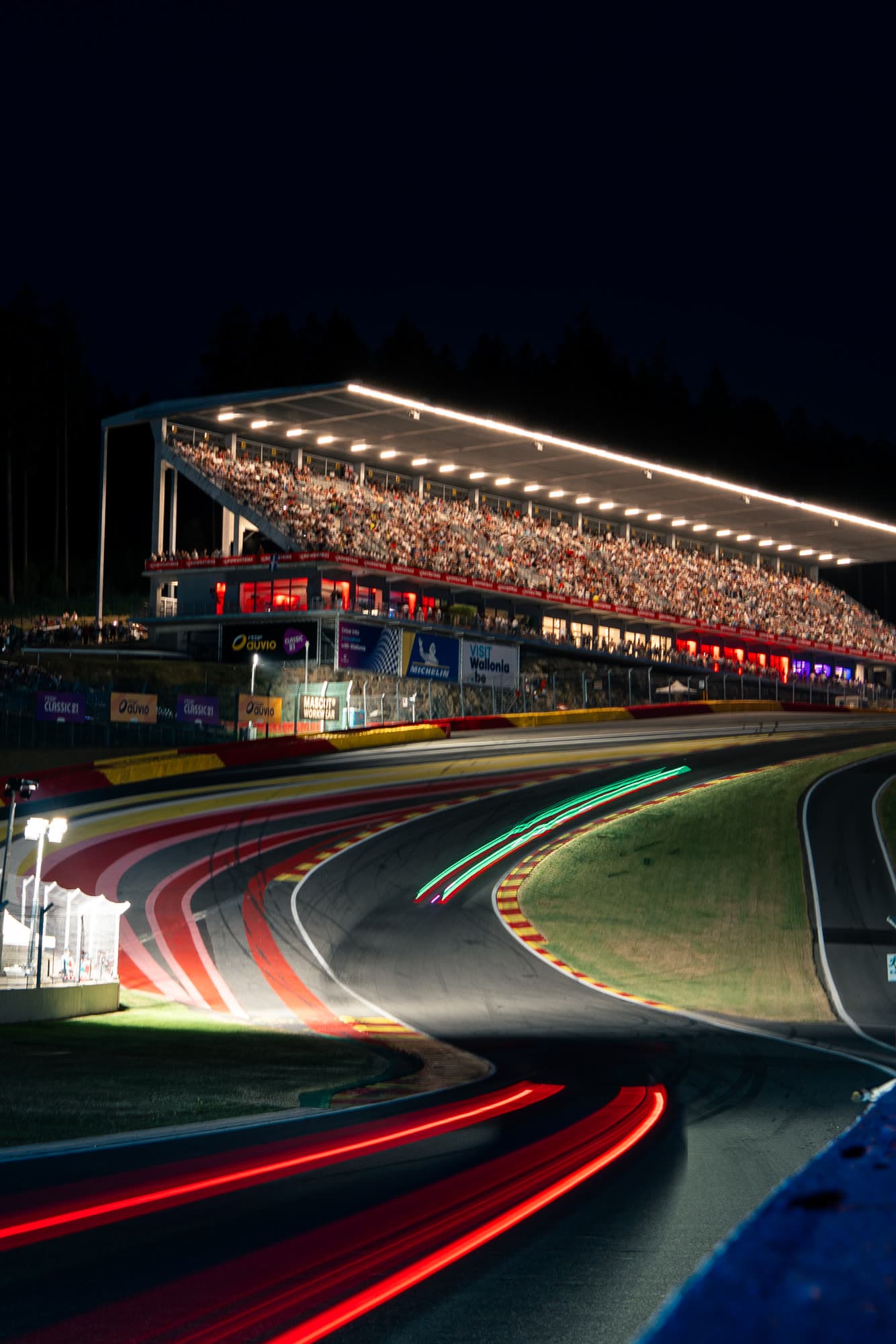
Handheld, below about 1/60 your own shake starts to show even if the car is still. For night trails I use 1 to 2.5 seconds with the camera resting on something solid.
- Freeze a fast car: 1/1000 or faster.
- Panning: between 1/160 and 1/60, tracking the car.
- Night trails: 1 to 2.5 s, camera locked.
03Aperture
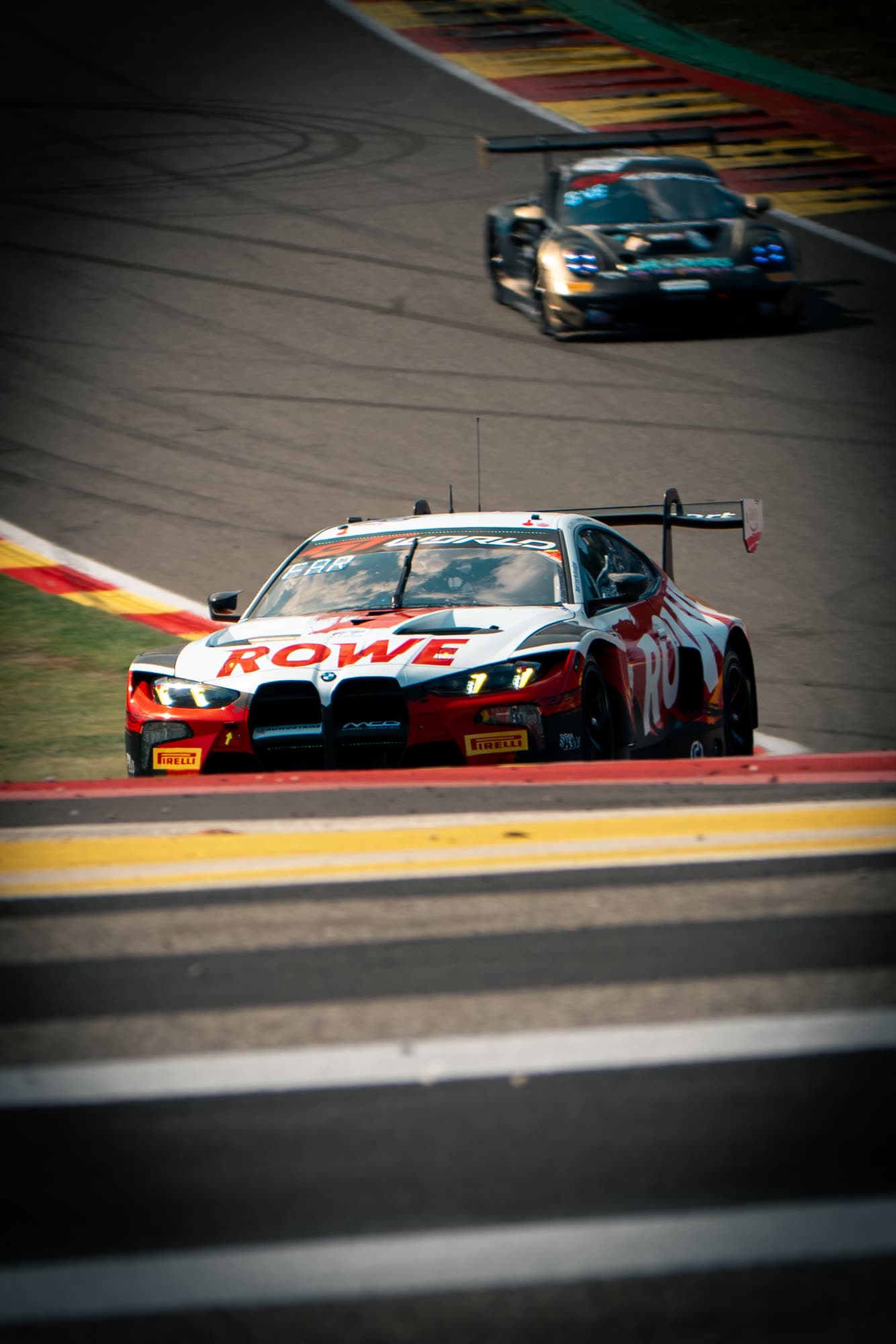
Aperture is written as an f-number. Careful: the smaller the number, the bigger the opening. f/2.8 lets in a lot of light and blurs the background, f/8 lets in less but keeps the whole scene sharp.
The sharp zone is called depth of field. Open aperture to separate the subject from what is in front and behind it, closed aperture for landscapes and light trails.
04ISO
ISO brightens the picture without changing shutter or aperture, but it adds noise, the grain you see in dark areas. How much depends on the camera: modern sensors handle high values well.
The simple rule: keep it as low as you can and raise it only when shutter and aperture are not enough. With the camera on a tripod, the Spa light trails are at ISO 100.
05Where to start
You don't need to start in manual. Use aperture priority (A or Av) when you care about blur in the background, shutter priority (S or Tv) when you care about motion, and leave ISO on auto with a maximum limit.
Shoot RAW: the file keeps far more information than a JPEG, and in Lightroom you can recover highlights and shadows that looked lost.
06Focus
For still subjects, single autofocus (AF-S) is fine. For anything that moves, use continuous autofocus (AF-C) with tracking: the camera follows the car while you think about the frame.
With cars on track, use burst mode: out of ten frames, one has the wheel in the right place and the right light on the bodywork.
07Light
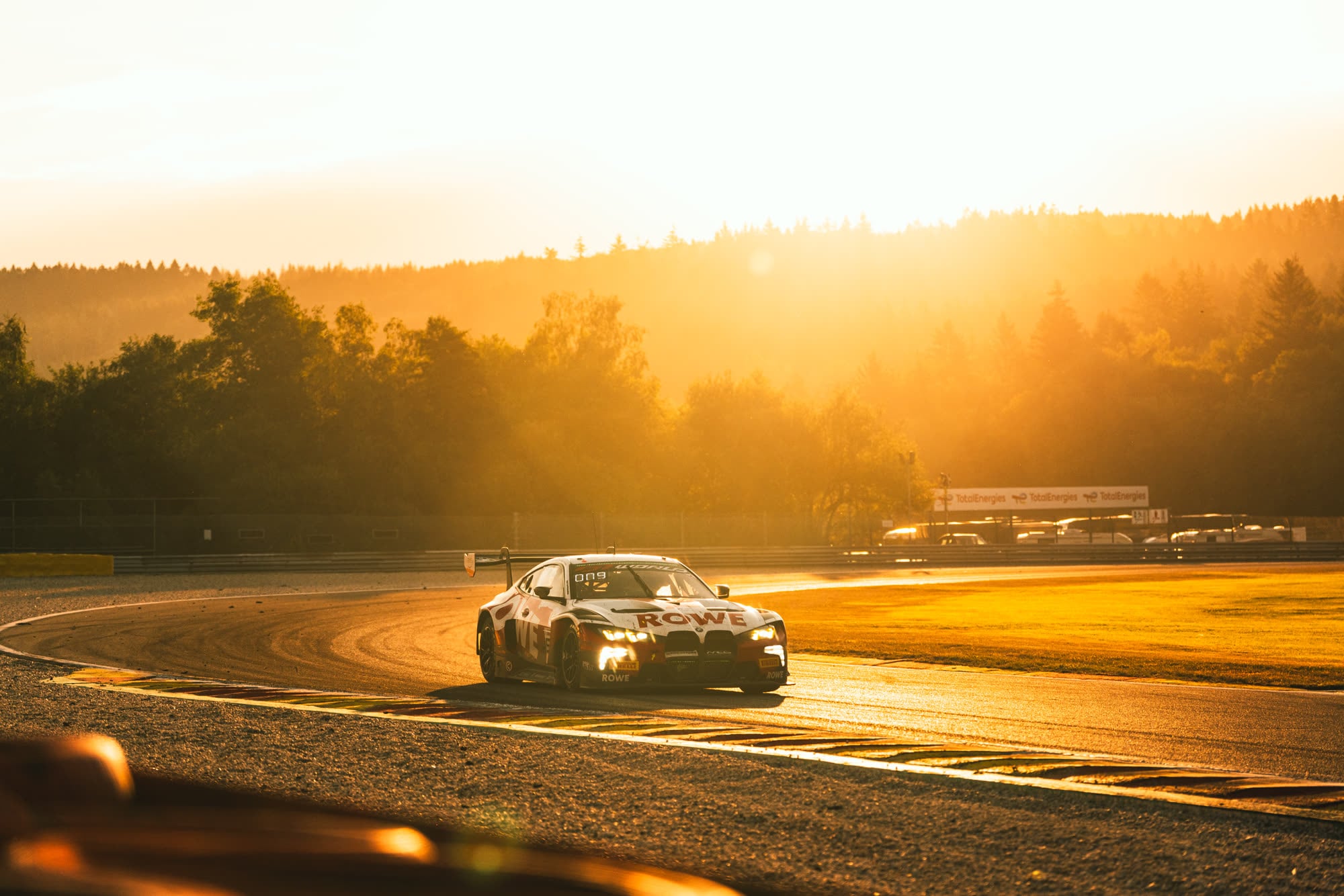
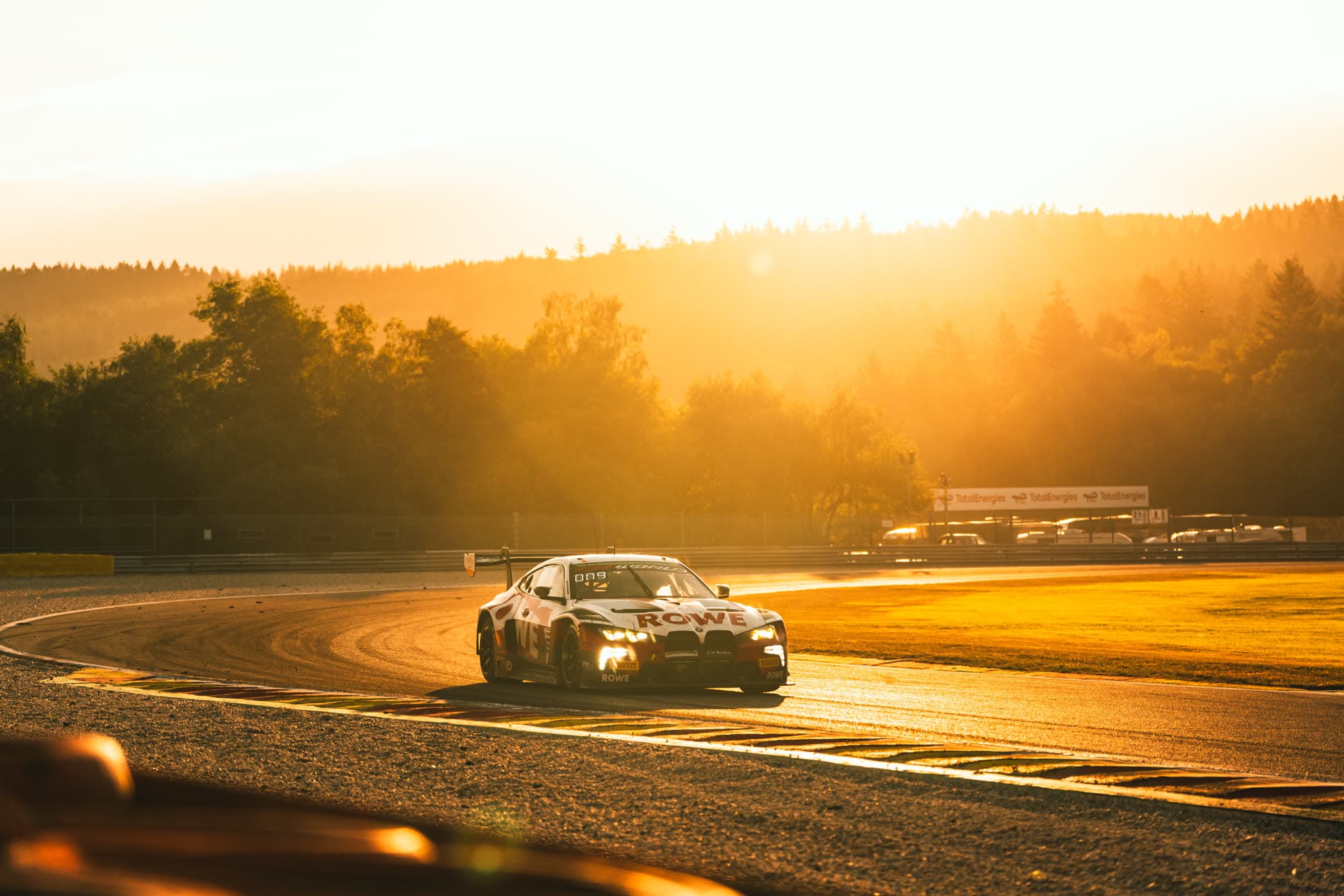
The same car changes completely with the light. Midday light is hard and flat. Sunrise and sunset light, the golden hour, is low and warm and shapes the bodywork.
Against the sun, expose for the highlights: let the shadows go dark, don't blow out the sky.
08Composition
Leave space in front of the car, in the direction it is going. Use the lines of the track, the kerbs and the barriers to lead the eye to the subject.
Change your point of view: low at tarmac level, through a fence, from far away with a long lens. The trackside shot everyone takes is the one nobody remembers.
- Exercise: one corner, one hour, at least five different points of view.